
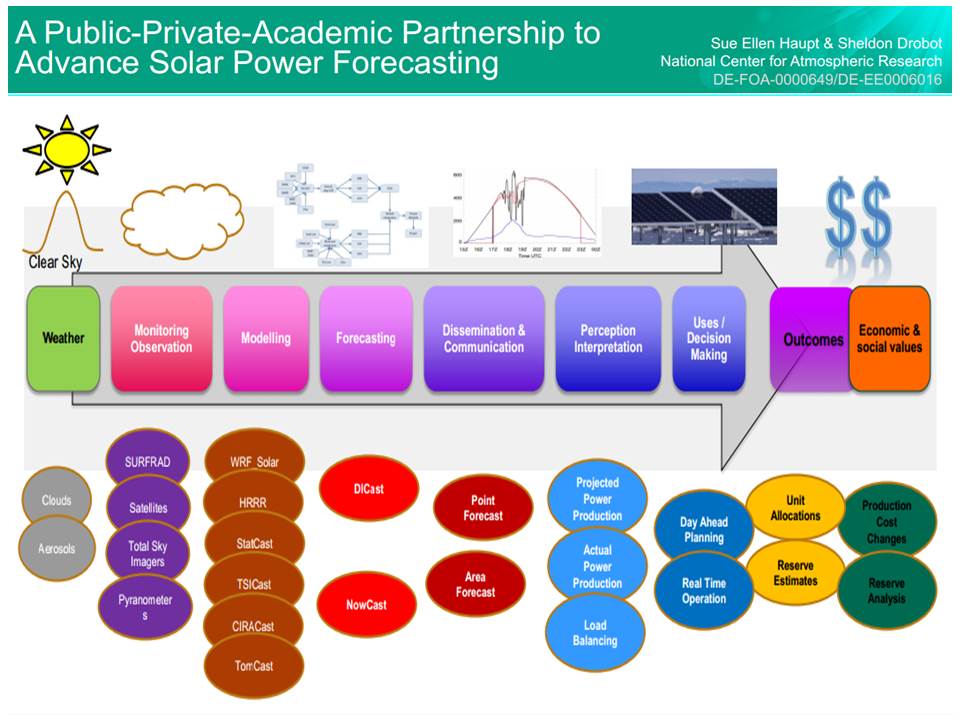
Imagine a world where the sun’s energy is harnessed with such precision that our power grids hum with efficiency and reliability, even when clouds gather unexpectedly. That future is within reach, and it hinges on effectively integrating solar forecasting into our grid operation workflows.
At its heart, solar forecasting is about predicting the amount of solar energy that will be generated at a specific location over a given period. Why does this matter? Because as solar energy becomes an increasingly significant part of our energy mix, grid operators need accurate forecasts to manage the variability of solar power, balance supply and demand, and ensure a stable and dependable electricity supply for everyone. Without these forecasts, grids can face instability, leading to potential blackouts, increased reliance on fossil fuels, and hindering the progress of decarbonization efforts.
A practical tip for those looking to improve their solar forecasting integration: start small and focus on a specific pain point. For example, begin by using short-term forecasts (e.g., hour-ahead) to optimize the dispatch of fast-ramping resources like battery storage or natural gas peaker plants. This targeted approach allows you to demonstrate the value of solar forecasting quickly and build confidence in its capabilities before tackling more complex integration challenges.
Understanding the Fundamentals of Solar Forecasting
Solar forecasting leverages a combination of historical data, weather models, and real-time observations to predict solar irradiance and power output. These forecasts come in various time horizons, ranging from very short-term (minutes to hours ahead) to long-term (days to weeks ahead). Each time horizon serves a different purpose in grid operations. Short-term forecasts are crucial for real-time dispatch and frequency regulation, while longer-term forecasts aid in unit commitment and resource planning.
The accuracy of solar forecasts depends on several factors, including the quality of weather data, the sophistication of the forecasting models, and the specific characteristics of the location. Cloud cover, aerosol concentration, and even snow cover can significantly impact solar irradiance and, consequently, the accuracy of forecasts. Therefore, integrating diverse data sources and employing advanced machine learning techniques are essential for improving forecast accuracy.
Integrating Solar Forecasting into Grid Operation Workflows: A Step-by-Step Guide
Integrating solar forecasting into existing grid operation workflows requires a strategic and phased approach. Here's a step-by-step guide to help you navigate the process:1. Assessment and Planning:
Identify Key Stakeholders: Bring together grid operators, forecasters, renewable energy developers, and system planners. Understanding everyone's needs ensures a smoother integration. Define Objectives: Clearly define what you want to achieve with solar forecasting. Are you aiming to reduce curtailment of solar energy, improve grid stability, or optimize dispatch of other resources? Evaluate Existing Infrastructure: Assess your current grid management systems, data infrastructure, and communication protocols. Identify any gaps or limitations that need to be addressed. Select Forecasting Tools and Providers: Research available solar forecasting solutions, considering factors such as accuracy, cost, integration capabilities, and vendor support. Consider a pilot program with multiple vendors to compare performance.
2. Data Integration and Management
Establish Data Feeds: Integrate real-time weather data, historical solar irradiance data, and power output data from solar power plants into your forecasting system. Ensure Data Quality: Implement data validation and quality control procedures to ensure the accuracy and reliability of the data used for forecasting. This includes identifying and correcting errors, handling missing data, and filtering out outliers. Develop a Data Management System:Create a centralized data repository to store and manage all relevant data. This system should be secure, scalable, and accessible to authorized users.
3. Model Implementation and Training
Choose Appropriate Forecasting Models: Select forecasting models that are appropriate for your specific needs and the characteristics of your grid. Consider using a combination of statistical models and machine learning algorithms. Calibrate and Validate Models: Calibrate your forecasting models using historical data and validate their performance against real-time observations. Regularly retrain your models as new data becomes available. Develop a Model Monitoring System:Implement a system to continuously monitor the performance of your forecasting models and identify any deviations from expected behavior.
4. Workflow Integration and Automation
Integrate Forecasts into Grid Management Systems: Integrate solar forecasts into your energy management system (EMS), supervisory control and data acquisition (SCADA) system, and other relevant grid operation tools. Automate Forecasting Processes: Automate the entire forecasting process, from data acquisition to forecast dissemination. This will reduce the risk of human error and improve the efficiency of your operations. Develop Standard Operating Procedures:Create clear and concise standard operating procedures (SOPs) for using solar forecasts in grid operations. These SOPs should outline the roles and responsibilities of different stakeholders and provide guidance on how to respond to different forecast scenarios.
5. Monitoring and Evaluation
Track Forecast Accuracy: Continuously monitor the accuracy of your solar forecasts using appropriate metrics, such as mean absolute error (MAE) and root mean squared error (RMSE). Evaluate Impact on Grid Operations: Assess the impact of solar forecasting on grid stability, reliability, and efficiency. Track key performance indicators (KPIs) such as curtailment of solar energy, frequency regulation performance, and dispatch costs. Iterate and Improve:Continuously iterate and improve your solar forecasting system based on the results of your monitoring and evaluation efforts. Incorporate new data sources, refine your forecasting models, and adapt your workflows as needed.
Benefits of Integrating Solar Forecasting
The benefits of integrating solar forecasting into grid operation workflows are substantial and far-reaching: Improved Grid Stability: Accurate solar forecasts enable grid operators to anticipate and manage the variability of solar power, reducing the risk of grid instability and blackouts. Reduced Curtailment: By knowing when and where solar energy will be available, grid operators can optimize the dispatch of other resources and minimize the curtailment of solar power. Increased Renewable Energy Penetration: Solar forecasting facilitates the integration of more solar energy into the grid, accelerating the transition to a cleaner and more sustainable energy future. Lower Operating Costs: Optimized dispatch of resources based on solar forecasts can reduce fuel consumption, lower operating costs, and improve the overall efficiency of grid operations. Enhanced Resource Planning:Long-term solar forecasts provide valuable information for resource planning, enabling utilities to make informed decisions about future investments in renewable energy and grid infrastructure.
Addressing Common Challenges
Integrating solar forecasting is not without its challenges. Here are some common hurdles and strategies for overcoming them: Data Availability and Quality: Ensure access to high-quality weather data and solar power plant data. Invest in data validation and quality control procedures to minimize errors and improve accuracy. Model Complexity: Choose forecasting models that are appropriate for your specific needs and the available data. Avoid overly complex models that may be difficult to interpret and maintain. Integration with Existing Systems: Carefully plan the integration of solar forecasts into existing grid management systems. Use open standards and interoperable technologies to ensure seamless communication. Communication and Coordination: Foster effective communication and coordination among grid operators, forecasters, and renewable energy developers. Establish clear roles and responsibilities to avoid confusion and ensure a smooth workflow. Uncertainty and Risk Management:Acknowledge the inherent uncertainty in solar forecasting and develop strategies for managing the associated risks. This may involve using probabilistic forecasts, implementing contingency plans, and diversifying your energy mix.
People Also Ask (FAQs)
How accurate can solar forecasts really be?
Solar forecast accuracy varies depending on the time horizon and location. Short-term forecasts (minutes to hours ahead) can achieve relatively high accuracy, with errors typically in the range of 5-10%. Longer-term forecasts (days to weeks ahead) are less accurate, with errors ranging from 15-30%. However, ongoing research and development efforts are continuously improving the accuracy of solar forecasts.
What type of weather data is most important for solar forecasting?
The most important weather data for solar forecasting includes: Solar Irradiance: Measures the amount of solar radiation reaching the Earth's surface. Cloud Cover: Indicates the amount and type of clouds in the sky, which significantly affects solar irradiance. Temperature: Influences the efficiency of solar panels. Wind Speed and Direction: Affect cloud movement and can impact the performance of solar tracking systems. Precipitation:Reduces solar irradiance and can impact the operation of solar power plants.
How much does it cost to implement solar forecasting?
The cost of implementing solar forecasting depends on several factors, including the size and complexity of your grid, the chosen forecasting solutions, and the level of integration required. Costs can range from a few thousand dollars per year for basic forecasting services to several million dollars for advanced systems with comprehensive data integration and model customization.
The journey to a fully integrated, solar-powered grid may have its complexities, but the path is illuminated by innovation and determination. By embracing solar forecasting and weaving it into the fabric of your grid operations, you're not just preparing for the future – you're actively building a more resilient, sustainable, and brighter tomorrow for everyone.